Which John Deere Gator Is Right for You? A UK Buyer’s Guide for Farms, Estates and Turf
People often ring us asking for “a Gator” as if there’s only one. We have nine in our current line-up, and they differ far more than the green and yellow paint suggests. A six-wheeler for carrying feed across wet pasture has almost nothing in common with a quiet electric runabout for a golf course. Neither has much in common with a diesel crossover with a heated cab, built for a keeper who’s out in all weathers from October to February.
This guide goes through the range the same way we would if you came into one of our depots. What are you carrying? What ground are you driving on? Who’s riding with you? Will it ever need to go on the road? Once you’ve answered those four questions, the choice usually comes down to one or two models.
Key takeaways
- Start with the job, not the engine. Payload, ground conditions and passengers narrow the choice faster than horsepower does.
- The traditional Gators (GS, TE, TH 6×4 and HPX) are work vehicles first: simple, tough and gentle on the ground.
- The XUV crossovers are the better choice for longer distances, rough tracks and anyone spending hours a day in the seat. Full suspension and power steering make the difference.
- Electric models suit sites where noise matters and the daily distance is predictable.
- If the Gator will ever use a public road, sort out the road-legal spec and tax class before you order, not after.
The short answer: which Gator for which job
| Model | Engine | Cargo box | Towing | Top speed | Seats | Best suited to |
|---|---|---|---|---|---|---|
| Gator GS Petrol | 14hp petrol | 363 kg | 680 kg | 28 km/h | 2 | Golf courses, sports grounds, light estate work |
| Gator GS Electric | 48V electric, lithium batteries | 363 kg | 680 kg | 28 km/h | 2 | As above, where quiet matters |
| TE 4×2 Electric | 48V electric | 272 kg | 272 kg | 21 km/h | 2 | Turf, schools, campuses, short fixed routes |
| TH 6×4 Diesel | 18.2hp, 3-cyl diesel | 544 kg | 635 kg | 32 km/h | 2 | Heavy loads on soft ground |
| HPX815E | 854cc, 3-cyl diesel | 454 kg | 590 kg | 40 km/h | 2 | All-round farm and estate work, 4WD |
| XUV855M S4 | 22.8hp, 3-cyl diesel | 454 kg | 680 kg | Ask us | 4 | Moving teams and kit together |
| XUV875M / XUV875M HVAC | 22.8hp, 3-cyl diesel | 454 kg | 907 kg | 50 km/h | 3 | Long days, rough tracks, year-round use |
Figures are manufacturer specifications and can vary with options and UK specification. Check the exact spec of the machine you’re quoted. The ProGator 2030A is a specialist turf vehicle and is covered separately below.
Start with what you’ll be carrying
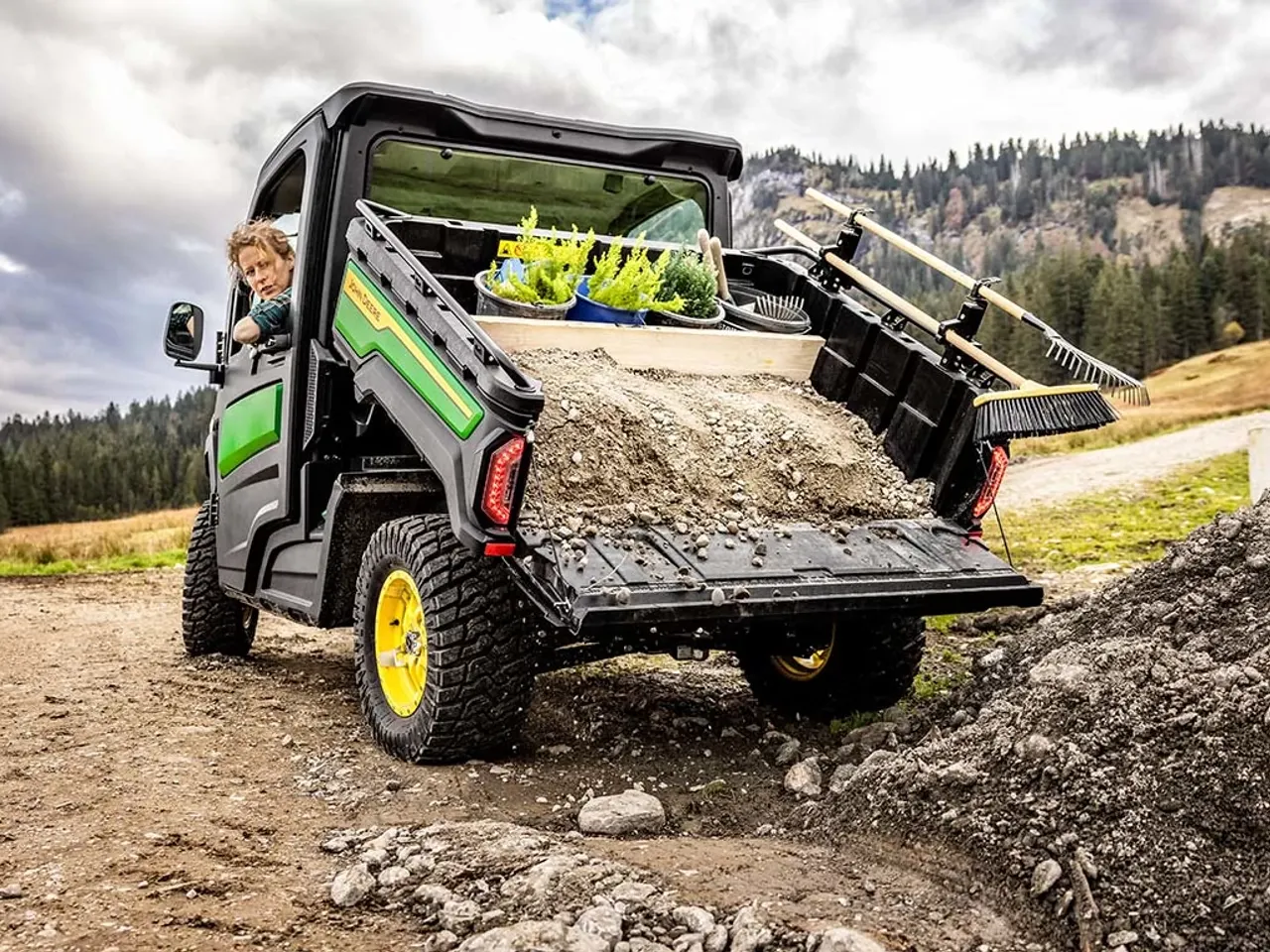
The cargo box is the reason most Gators get bought, so start there. Work out the heaviest load you’ll carry in a normal week, not the heaviest load you can imagine. A pallet of feed bags, a few hundred kilos of fence posts, a full water bowser, a tool kit and a couple of strainers: put a rough weight against each one.
There are three numbers to keep separate:
- Cargo box capacity is what the box itself can carry.
- Payload is the box plus driver, passengers and any accessories. It’s always higher than the box figure, but it’s shared between all of those.
- Towing capacity is what you can pull on a trailer behind the Gator. If you regularly tow a quad trailer, a sprayer or a log trailer, this can matter more than the box.
As a rough guide, if most of your loads are under 270 kg, the whole range can cope. If you’re regularly putting 500 kg or more in the box, you’re looking at the TH 6×4. If you tow more than about 700 kg, the XUV875M is the only Gator rated for it, at 900 kg.
Traditional or crossover? The big split in the range
John Deere splits the Gator range into two broad families, and this decision matters more than any other.
Traditional Gators (GS, TE, TH 6×4 and HPX) have simpler suspension, lower top speeds and a more upright, utilitarian feel. They’re lighter on the ground, easier to maintain and cheaper to buy. If your Gator spends its life going between the yard, the sheds and the nearest few fields, a traditional model usually does the job well and costs less to keep.
XUV crossovers have fully independent suspension, power steering and higher speeds. Driving one feels closer to a small 4×4 than a site vehicle. That makes a big difference over distance. If you’re checking stock across a spread-out farm, covering a shoot or estate several miles across, or running a team between sites, the extra comfort pays for itself in a few weeks. Your back will thank you before your accountant does.
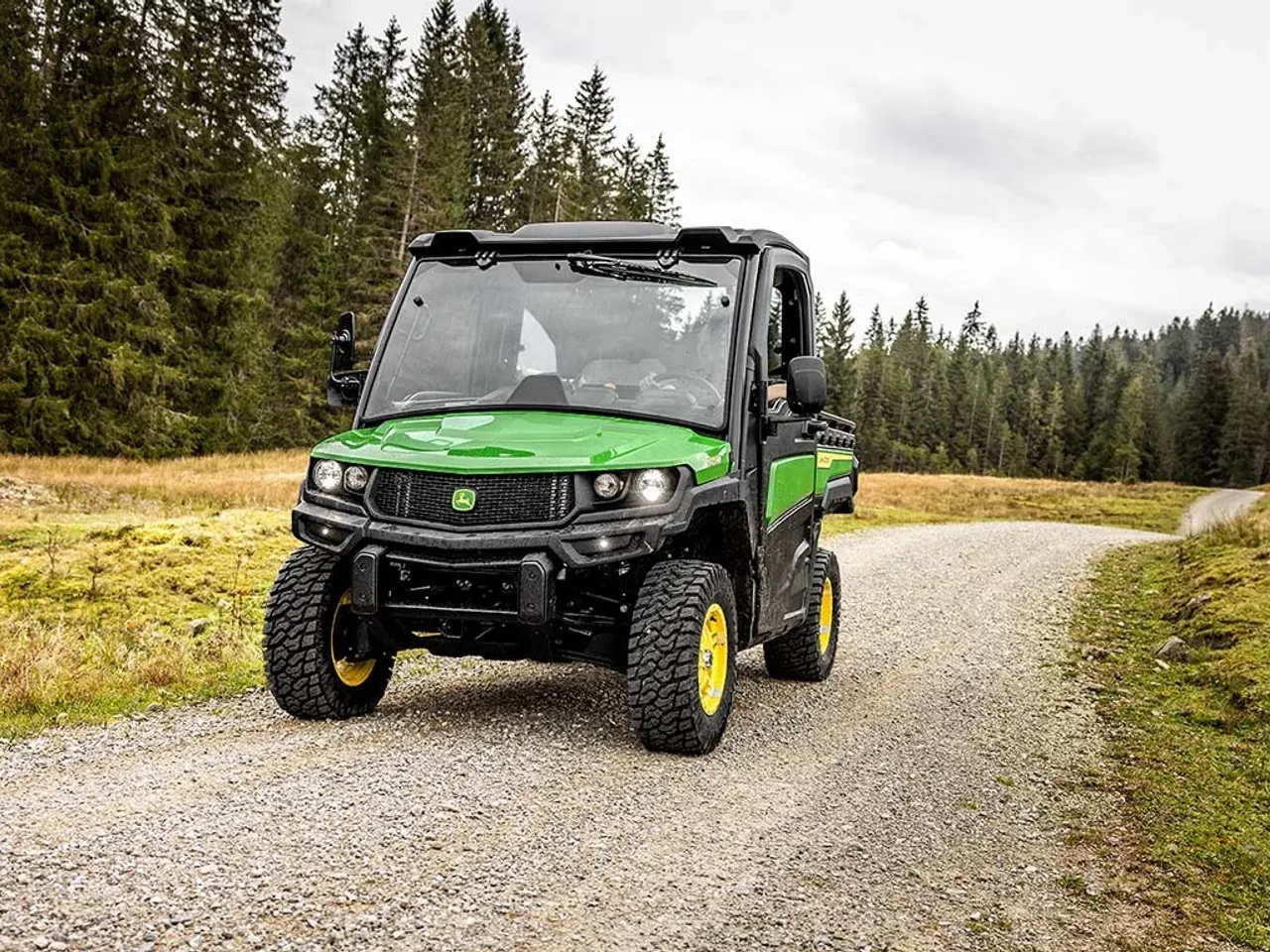
The Gators, one by one
Gator GS Petrol and GS Electric
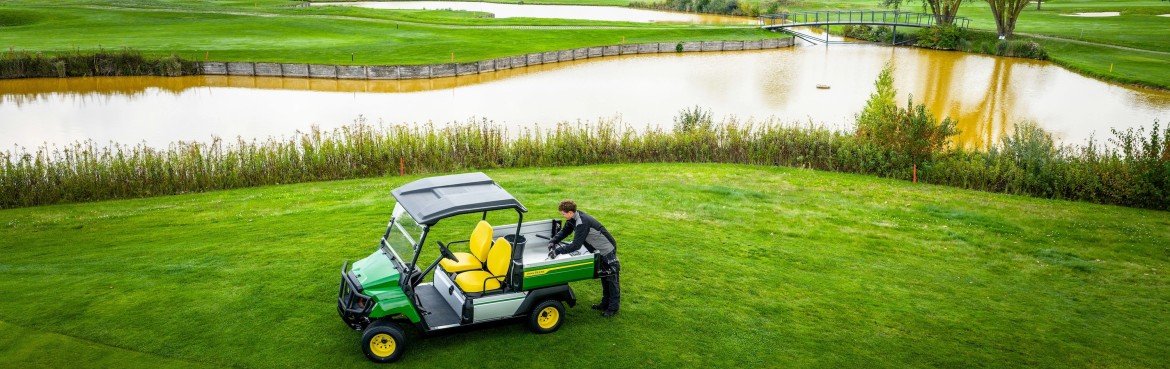
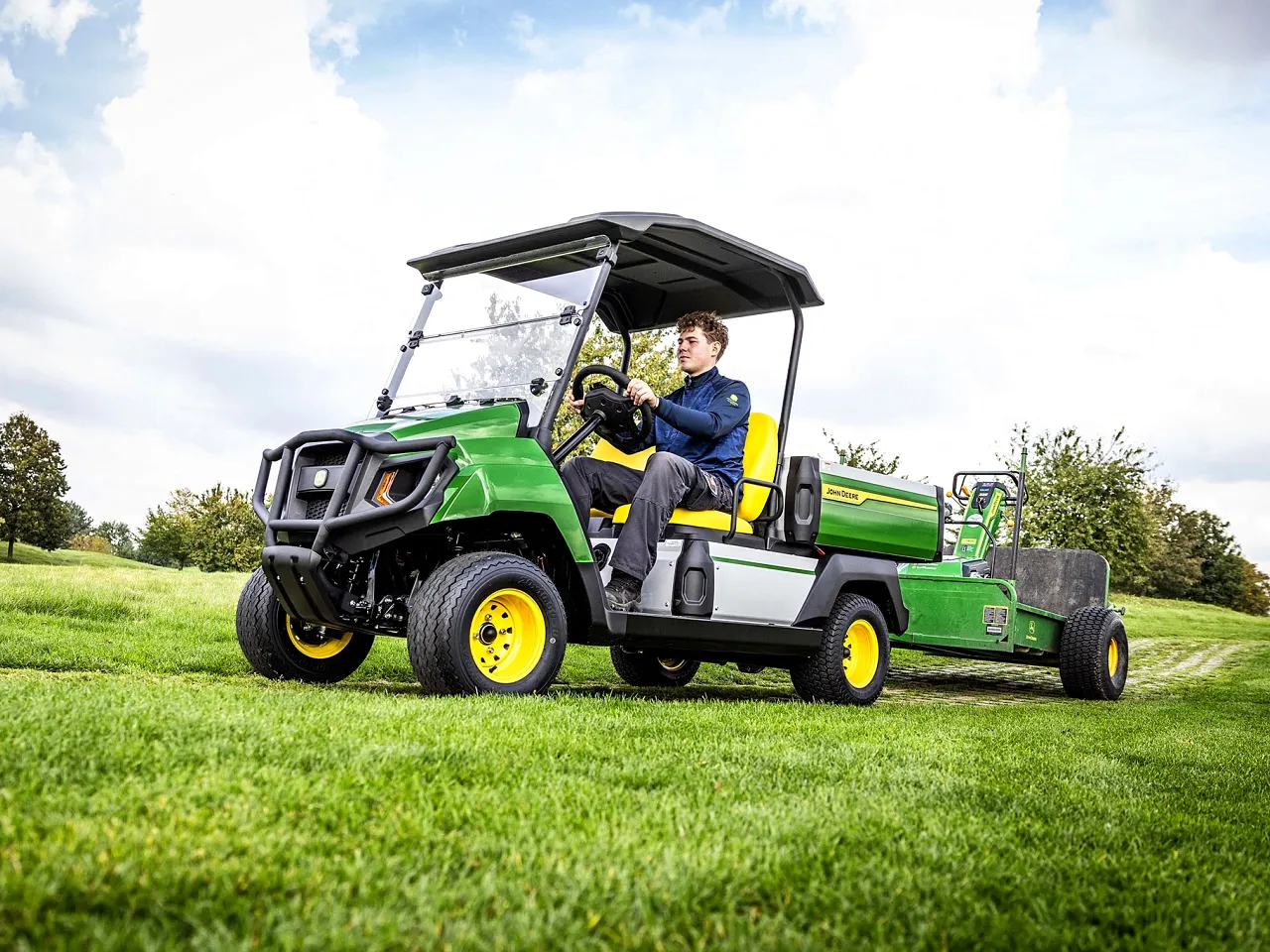
The GS is the newest and most compact Gator we sell. It was built with greenkeepers in mind, for course set-up, hand watering, pulling mower trailers and moving between holes. At about 1.25 m wide, it fits through tight gaps and runs along cart path edges without chewing up the turf.
The petrol version has a 402cc single-cylinder engine with fuel injection, giving 14hp, and extra sound deadening. The electric version runs a 48V AC drive on eight lithium batteries. Both reach 28 km/h, carry 363 kg in the tipping box and tow up to 680 kg from a standard receiver hitch. Both are pedal-start with a stepless CVT, so there are no gears to think about, which makes them easy to hand to seasonal staff.
Best for: golf clubs, sports grounds, schools and smaller estates with lighter, regular jobs. We covered the launch in more detail in our Gator GS news story.
Gator TE 4×2 Electric
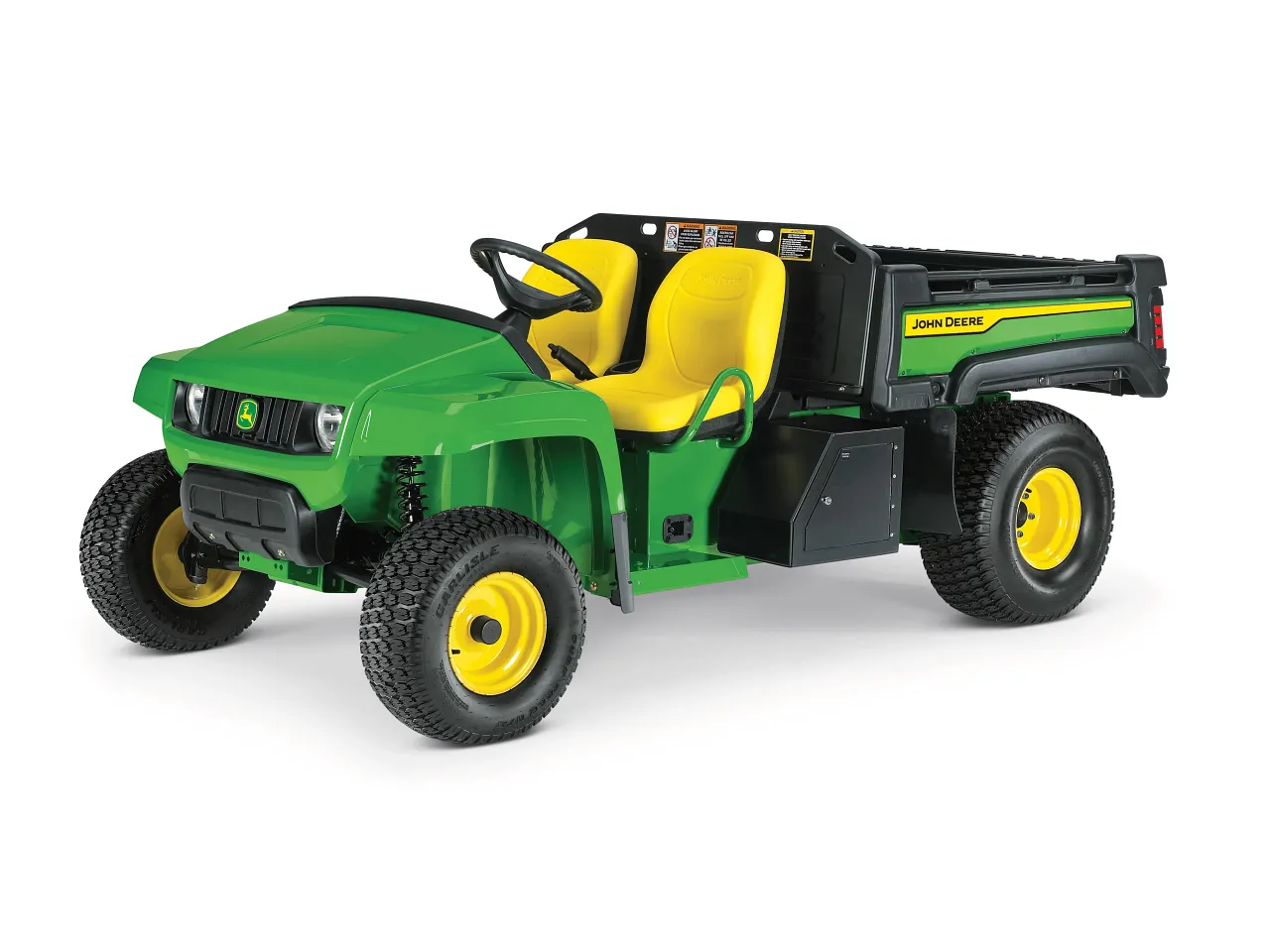
The TE is the longer-established electric Gator. It runs on a 48V system with eight batteries and gives a full working day (typically seven to eight hours) between charges. It’s quiet and produces no exhaust, so it’s useful anywhere you’re working near people, livestock or buildings.
It’s a two-wheel-drive machine with a top speed of around 21 km/h. That’s slower than the petrol and diesel models, but in practice it rarely matters on a golf course or around a site. The box takes 272 kg, total payload is 408 kg and towing is 272 kg, so it’s meant for light work rather than heavy haulage.
Best for: turf, parks, campuses and sites where the route is the same every day and there’s a socket at the end of it.
Gator TH 6×4 Diesel
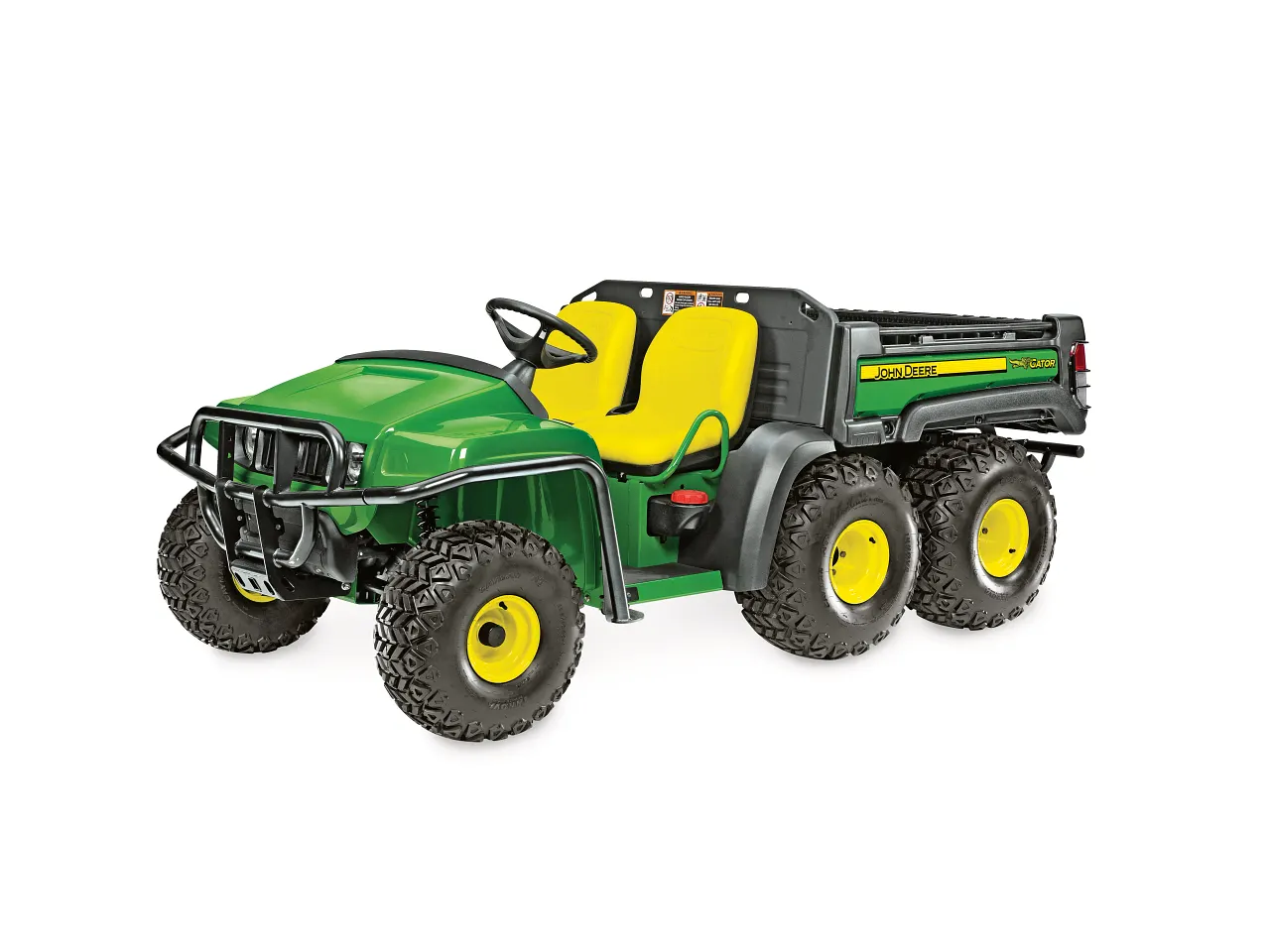
The TH 6×4 is the strongest worker in the traditional range. It’s the one we recommend most often to livestock farms with wet ground. Six wheels on wide, low-pressure tyres spread the weight, so it’ll cross soft pasture loaded where a four-wheeler would leave ruts or get stuck.
It’s powered by an 18.2hp three-cylinder diesel and carries 544 kg in the box, with a total payload of 726 kg and 635 kg of towing. Top speed is 32 km/h. The load height is low, which makes a real difference when you’re lifting feed sacks in and out all day.
Best for: livestock farms, wet or soft ground, heavy loads over short distances. It’s not the most comfortable over bumpy tracks at speed, and it isn’t meant to be.
Gator HPX815E
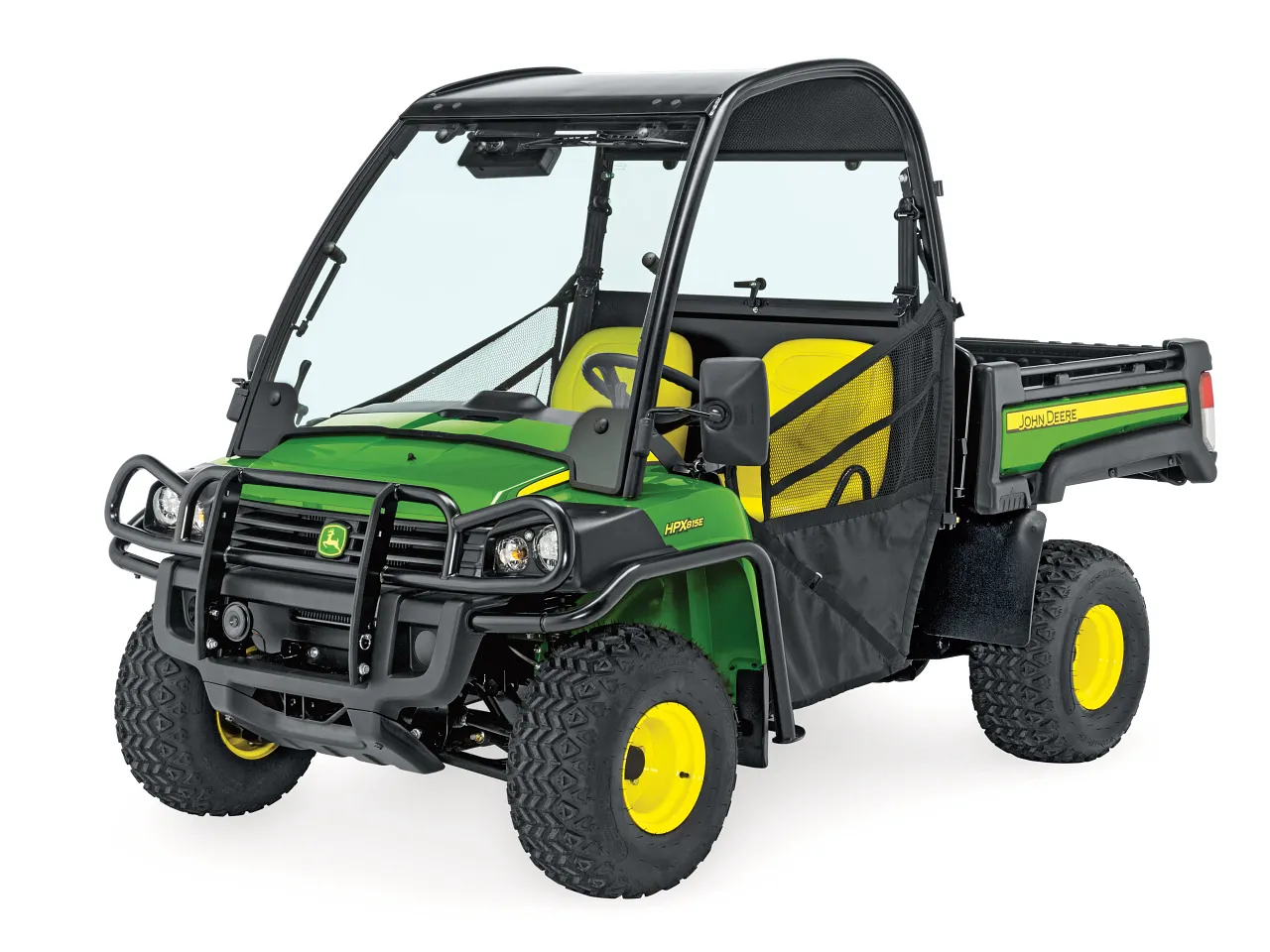
The HPX is the all-rounder. It has selectable four-wheel drive, an 854cc three-cylinder diesel, a 454 kg box (635 kg total payload) and 590 kg of towing. Top speed is 40 km/h, with a two-speed transmission that gives you a low range for pulling and climbing. The hydroformed steel frame copes well with being overloaded by someone who says it was only a few more posts.
It keeps the simpler, tougher build of the traditional range but adds 4WD and more speed, so it suits mixed farms and estates where the ground varies from hard yard to wet woodland ride. It also comes with rollover protection and can be specified for the road.
Best for: mixed farms, estates and contractors who want one Gator that will do most things without the price of an XUV.
Gator XUV855M S4
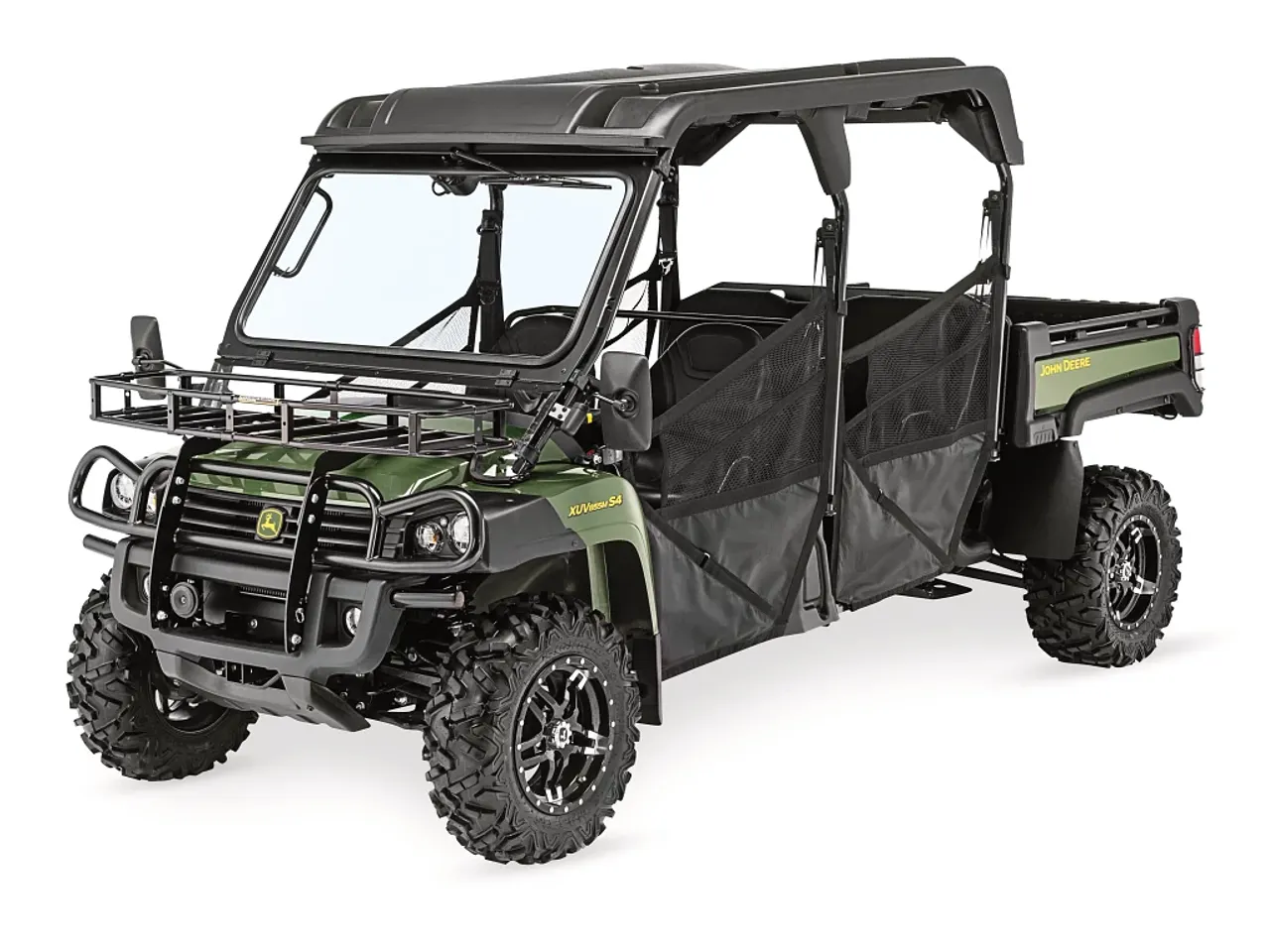
The S4 is the four-seater. It uses the same 22.8hp diesel as the XUV875M, with power steering, fully independent suspension and a 454 kg box. Fold the rear seat down and you get a flat load floor for extra kit, plus sealed storage under the seat.
It’s the obvious choice for shoots, estates and larger farms that need to move people and equipment together: beaters, a fencing gang, or a family checking stock on a Sunday. If you rarely carry more than one passenger, the three-seat XUV875M gives you a wider, roomier box and more towing (900 kg against 680 kg) for similar money.
Best for: shoots, estates, larger farms and anyone regularly carrying three or four people.
Gator XUV875M and XUV875M HVAC
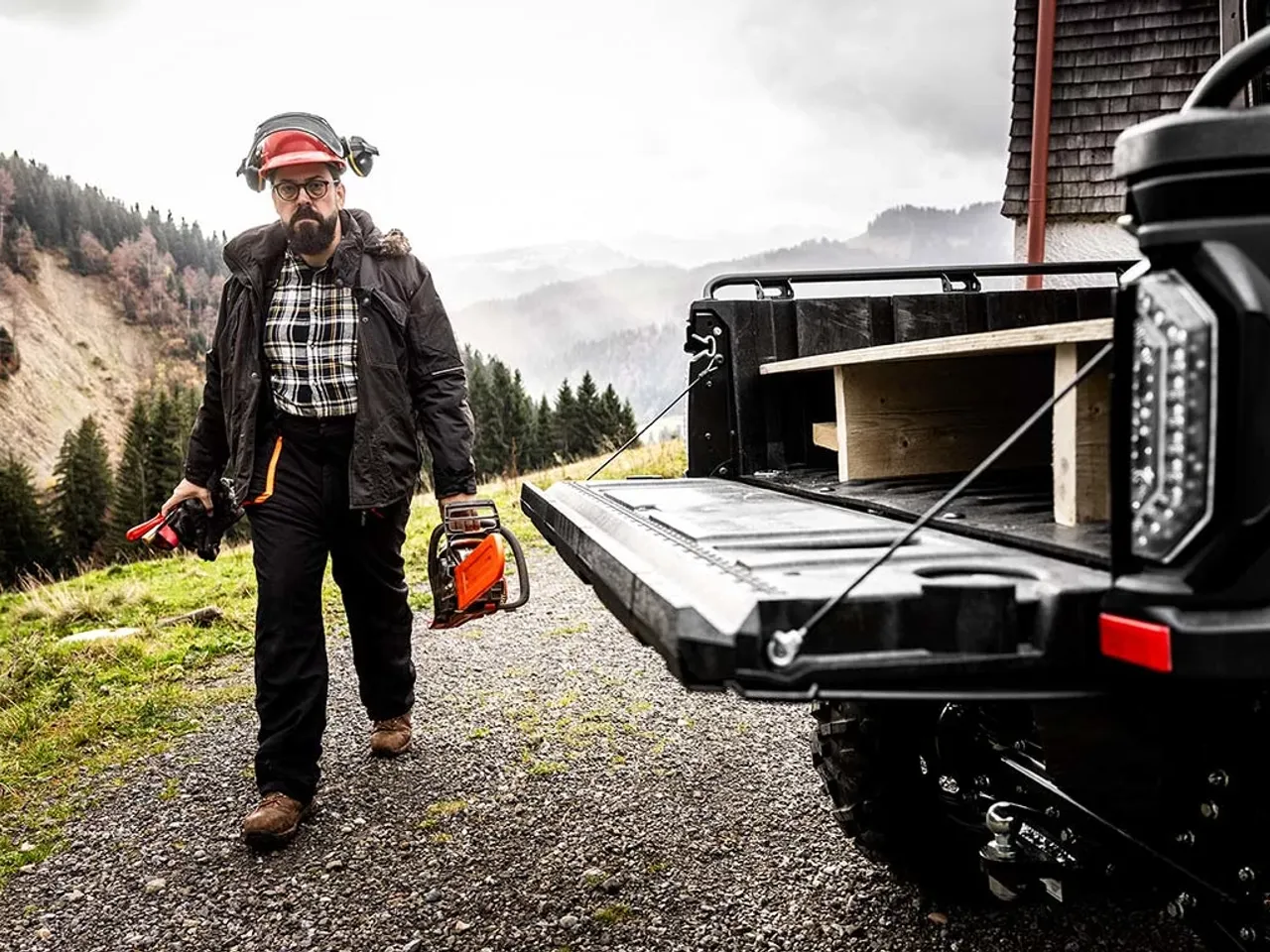
The XUV875M is the flagship diesel Gator and the one we sell most to farms that use their Gator all day, every day. The 854cc diesel gives 22.8hp, top speed is 50 km/h, the box takes 454 kg and towing goes up to 900 kg.
John Deere made some sensible changes when it replaced the old XUV865M. The cargo box is about 13% wider. The tailgate folds flat to make a workbench, which is handy for fencing and running repairs. The engine’s air intake was moved about 300 mm higher, so it breathes cleaner air on dusty tracks and in wet, muddy conditions. It seats three on a bench.
The HVAC version adds a fully sealed cab with heating and air conditioning as standard. If you’re out lambing in March or feeding through a wet January, it’s worth the extra.
Best for: busy livestock and arable farms, large estates and anyone who spends real hours in the seat in all weathers.
ProGator 2030A
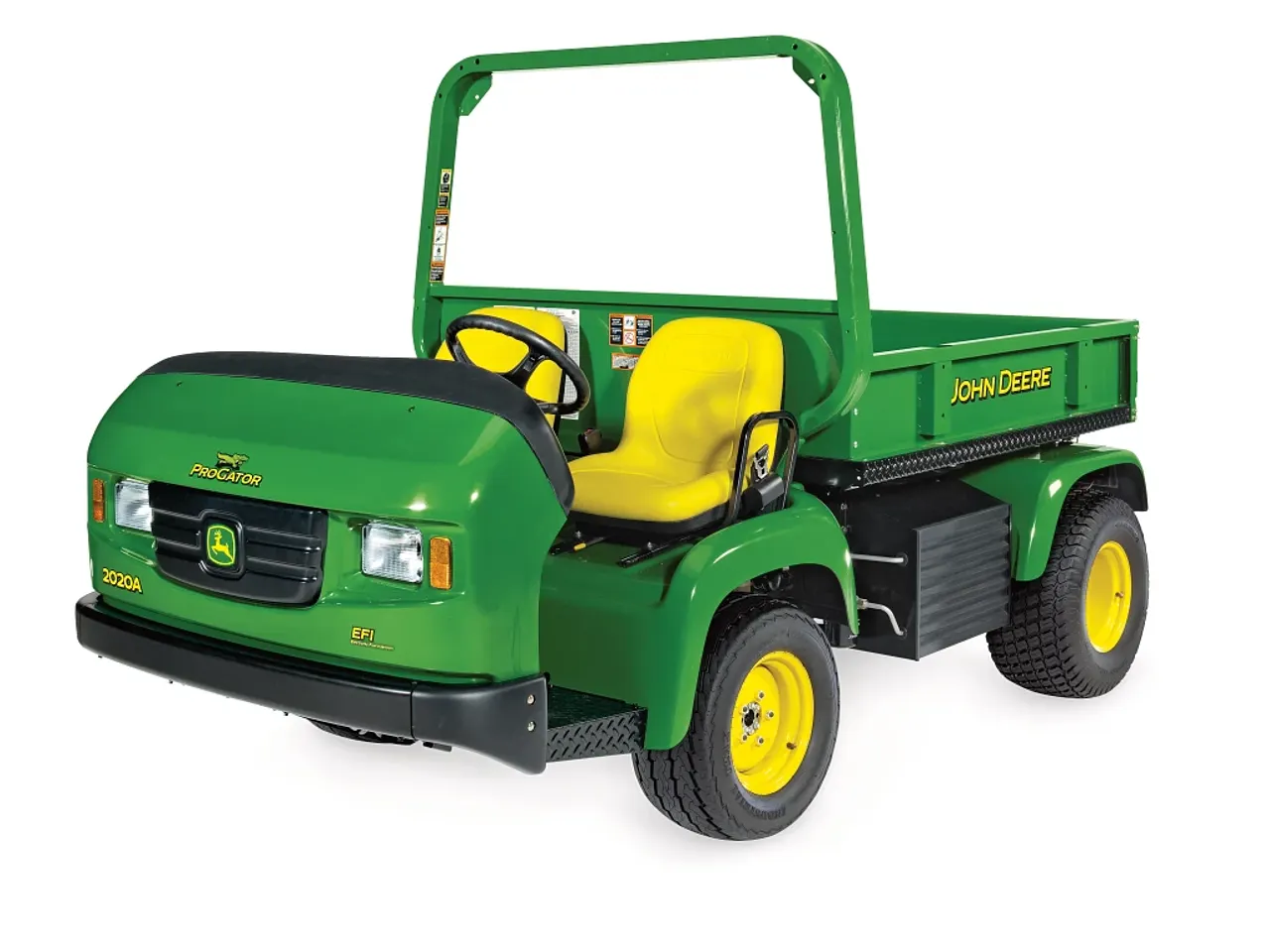
The ProGator is a different machine altogether. It’s a heavy-duty turf vehicle with a 1,267cc three-cylinder diesel, a five-speed manual gearbox, hydraulic power steering and a top speed of 30.7 km/h. It’s built to carry and power attachments: sprayers, top dressers and debris collection equipment for golf courses and sports grounds. If that’s what you need, it’s a conversation about the whole system, not just the vehicle, so give our turf team a call.
Petrol, diesel or electric?
Diesel is still the default for farms. Most farms have a diesel tank already, the engines have good low-down pulling power, and they cope with long days and heavy towing. Every Gator from the TH 6×4 upwards is diesel.
Petrol (the GS Petrol) is lighter, quieter than diesel and simpler for fleets that don’t keep diesel on site. It makes most sense on smaller, lighter-duty vehicles.
Electric works well when two things are true: the daily distance is predictable, and there’s somewhere to charge overnight. Golf courses, sports grounds, schools and estates near houses or holiday lets are the usual fits. There’s no fuel to manage, very little noise and less routine servicing. Electric is less suited to remote land with no power, very long days or regular heavy towing.
Cab, or no cab?
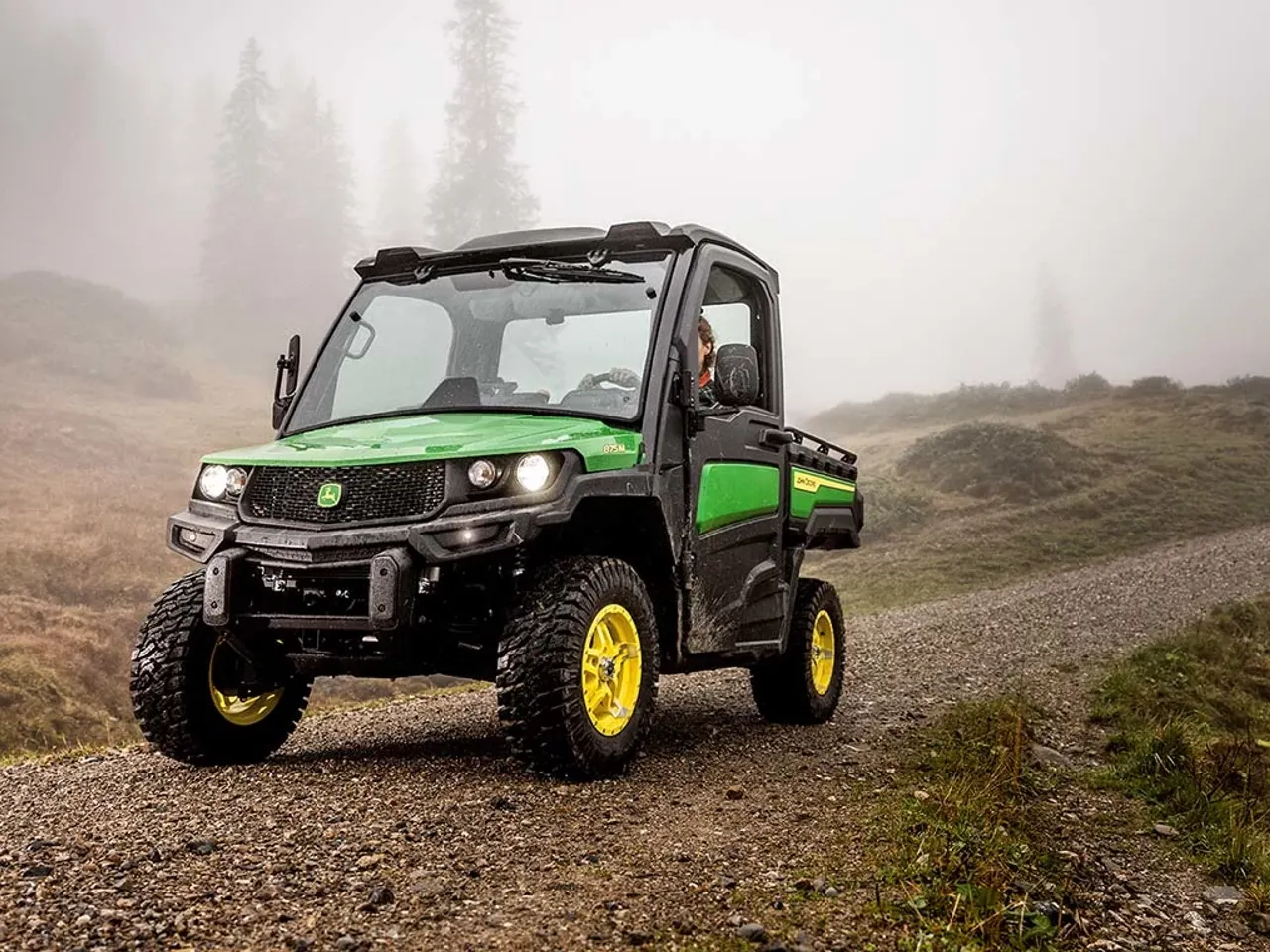
An open Gator with a canopy is cheaper, easier to get in and out of when you’re opening gates every few minutes, and fine for much of the year. A full cab makes sense when the Gator replaces a pickup or quad for winter work, or when the same person is in it for several hours a day.
Heating matters more than people expect. A cab without heat keeps the rain off but still feels cold by mid-morning in January. If you’re going to buy a cab, it’s usually worth going for the HVAC version of the XUV875M rather than adding a basic cab later.
If you’re opening and shutting gates all day on a stock farm, be honest about whether you’ll actually close the doors. Plenty of cab Gators spend their lives with both doors pinned open.
Road use, registration and red diesel
This is where buyers most often get caught out, so it’s worth getting right before you order.
Road use. A Gator that never leaves your land doesn’t need to be registered. If it will use public roads, even just to cross between fields, it needs to be a road-legal (type-approved) specification. It also needs to be registered, insured and taxed in the right class. Not every model or spec in the range is road-legal, and you can’t easily upgrade one later. A full car licence (category B) covers most road-legal Gators.
Tax class. A road-registered Gator used for agriculture, horticulture or forestry can normally go in a zero-rated class. One used for anything else, such as general estate, leisure or business use, will usually need a standard tax class.
Red diesel. Since April 2022, most businesses can no longer use red diesel. Agriculture, horticulture and forestry kept their entitlement, as did the upkeep of golf courses and amenity grassland. A Gator used for those purposes can run on red. One used for other work, such as general estate maintenance or leisure, should run on white diesel. HMRC does check, and “it was only a Gator” isn’t a defence.
The rules are detailed and depend on how you use the vehicle. Tell us how you’ll use your Gator and we’ll make sure the spec and paperwork match.
Safety: belts, loads and slopes
Gators are more stable than quad bikes, but they can still roll over, mostly on side slopes, when turning too fast, or with a badly placed load.
- Wear the seat belt. The rollover protection (ROPS) only protects you if the belt keeps you inside it.
- Passengers sit in seats. Never in the cargo box, and never more people than there are belted seats.
- Load low and central. A high or off-centre load raises the centre of gravity and makes slopes and corners riskier. Strap it down.
- Take slopes straight up and down where you can, not across, and slow down well before a turn.
- Keep kids out of the driving seat. John Deere’s minimum operator age is 16, and that’s for good reason.
If you’re buying a Gator for staff, include it in your farm or site risk assessment and give every driver a proper induction. Our team can run through the controls and safety features at handover.
New, ex-hire or used?
A new Gator gets you the full manufacturer warranty, the exact spec you want (including road-legal options) and access to finance. If the Gator is going to work hard every day, new usually makes the most sense over its lifetime.
Ex-hire and used Gators can be good value, especially for lighter-duty roles. When looking at a used one, check the hours rather than the age, look closely at the CV boots, suspension bushes and drive belt, and confirm whether it’s road-registered and how it’s taxed. You can browse what we have in stock on our used machinery page. Stock changes quickly, so it’s worth asking us to keep an eye out for the right spec.
Frequently asked questions
Which Gator is best for a livestock farm?
For soft ground and heavy loads over short distances, the TH 6×4. For larger farms where you’re covering more ground and spending longer in the seat, the XUV875M. Many busy farms end up running one of each.
Is a six-wheel Gator better than a four-wheel-drive one?
Neither is better; they do different jobs. The TH 6×4 spreads its weight over six low-pressure tyres, so it’s gentler on wet ground and carries more in the box. A 4WD HPX or XUV is faster, better on rough tracks and handles slopes and mud with more drive.
How far will an electric Gator go on a charge?
The TE typically manages seven to eight hours of normal work between charges. Actual range depends on load, hills, temperature and how much stop-start driving you do. For predictable daily routes with overnight charging, it’s rarely a problem.
Can I drive a Gator on the road?
Only if it’s a road-legal specification and has been registered, insured and taxed. A full car licence covers most road-legal Gators. Off-road-only models can’t be made road-legal later, so decide before you order.
Can my Gator run on red diesel?
If it’s used for agriculture, horticulture, forestry or looking after golf courses and amenity grassland, normally yes. For other uses, it should run on white diesel. Speak to us about your situation if you’re unsure.
Do I need a cab?
Not always. An open Gator with a canopy suits stock work with lots of gates. A cab, especially with heating, is worth it if the Gator replaces a pickup or quad for winter work, or someone is in it for hours at a time.
How often does a Gator need servicing?
It depends on the model and how hard it works, but most need an annual service at minimum, with more frequent checks on hard-worked farm machines. Our service team can set up a schedule that fits around your busy periods.
Can I use a Gator with John Deere’s precision technology?
Yes. Gators can be fitted with a JDLink modem that connects them to the John Deere Operations Center. You can then see location, hours and maintenance alerts alongside the rest of your John Deere fleet. It’s most useful on larger farms and estates running several vehicles.
Talk to TAG about the right Gator
The right Gator is the one that fits your jobs, your ground and how far you drive in a day. Tell us those three things and we’ll narrow it down quickly.
Browse our full range of John Deere Gator utility vehicles, call us on 0345 222 0456, or get in touch online. You’ll find our team at Evesham, Kemble, Leominster, Narberth and Allscott, with finance options available on new and used machines.
Finance subject to status. Terms and conditions apply.